Rethinking Digital Availability
Nov 17, 2025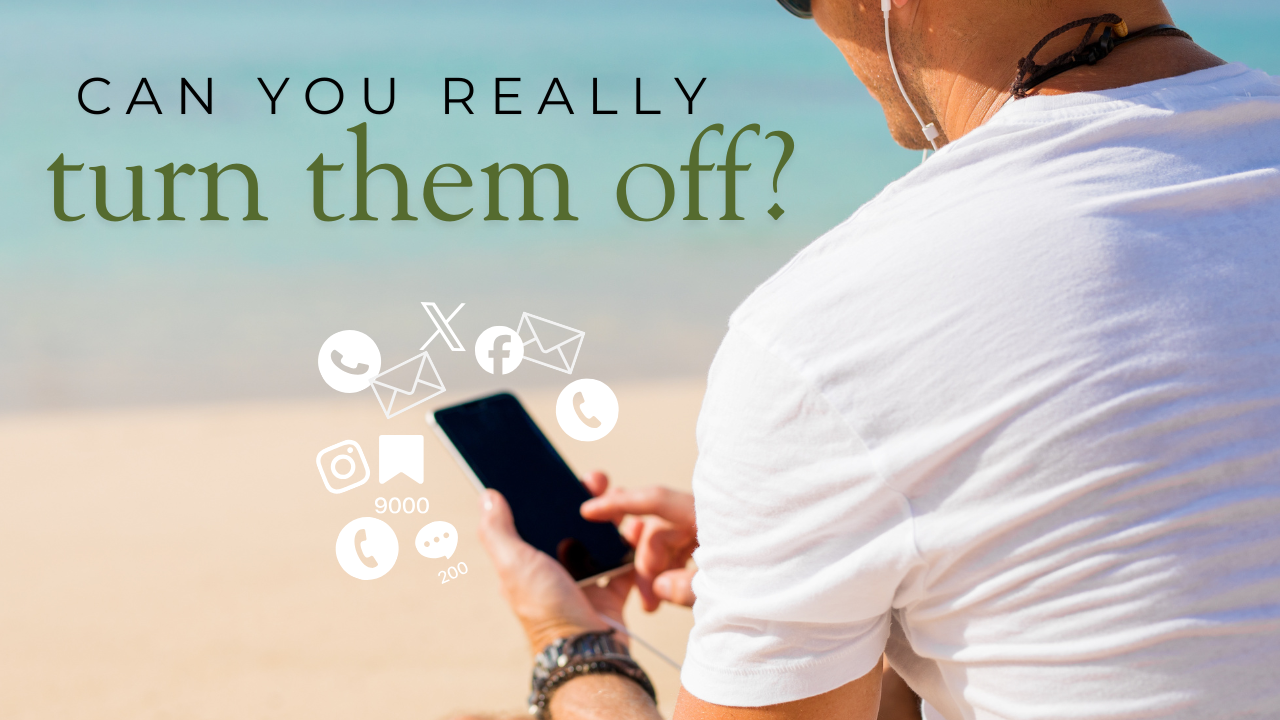
Written by Brian Curee
CEO, Chief Visionary & Strategist at Killer Bee Marketing
Back in 2010, I got a phone call that changed the way I thought about boundaries.
Someone was upset…really upset, that I didn’t answer calls or texts while on a family vacation. They said, “As a business owner, it’s your responsibility to be available 24/7. If you’re not, you’ll never make it.”
Their words stung a little, but my reply came out honest and calm:
“That’s not your choice to make. It’s mine, and I choose not to be available 24/7.”
Fifteen years later, the business is still here and doing well- not because I made myself available at all hours- but because my earlier decision taught me something foundational: I run the business; it doesn’t run me.
When “Always On” Becomes a Way of Life
I know this is easier said than done. Slowly but surely, the quiet invasion of "digital convenience" started to consume my schedule. Notifications from email, Slack, social media, and new messenger apps all began to creep in.
Those dings and vibrations felt harmless at first, but slowly, they began to blur the lines between living and working. It wasn’t just a business issue anymore, it was a relationship issue.
I started asking questions I came to realize a lot of people in my circle weren't yet:
- When did it become okay to text employees after hours just because they work in digital?
- Why do we accept constant notifications as “the new normal”?
- When did being available become more important than being present?
One person told me, “I’m overwhelmed by all the notifications, but it’s just how it is now.”
My response: “Just because something’s become the norm doesn’t mean we have to adopt it.”
Redefining Connection: From Constant to Conscious
The digital shift led to necessary changes for both myself and anyone who served on our team, starting in 2021. A cultural shift.
I turned off almost all app notifications, including email.
I started checking messages twice a day instead of every few minutes.
I invested in a small device called Brick, a tool designed to help people take back their time by limiting digital distractions.
We began shaping a work culture that values responsiveness without requiring constant availability, understanding that if we don’t model digital boundaries, we can’t expect anyone else to respect them.
Recently, someone pushed back on our availability after seeing this in our email signature:
“Office hours are Mon–Thurs, 10 am–5 pm EST. We don't check emails outside these times so team members can rest and recharge. For emergencies, call 863.899.7763 and leave a voice message.”
For some, that boundary feels surprising, especially in a world that expects instant replies. That’s exactly why it matters. When someone disagrees with the boundaries we’ve chosen or needs a level of access that doesn’t align with our values, I respond with honesty and kindness:
“It sounds like you need a partner with a different availability style, and that’s okay.”
Protecting digital boundaries isn’t about being rigid; it’s about being clear. I’ve been learning that clarity creates healthier expectations for everyone involved.
I’m Not Alone in This Mindset
A friend of mine who leads a tech company recently shared his approach on LinkedIn:
“I’m as digitally embedded as they come… but there’s so much digital chaos. I’m 99.9% opt-in to communication now — everything else is silenced. If it isn’t my wife, parents, or kids’ school, it isn’t ringing.”
He’s not anti-technology. He’s pro-boundary, and that’s the shift many of us need.
Consider This: Be Present in the Moment
The more “digitally” distracted we become, the easier it is to lose the why behind our work.
Digital boundaries aren’t about disconnection, they’re about choosing to be present.
It’s choosing when to engage and when to rest.
It’s giving your family, team, and even your clients the best version of you, not the distracted one.
It’s remembering that clarity, connection, and confidence don’t come from being “always on.”
They come from being fully here.
So here’s my challenge:
Turn off one notification today.
Take a walk without your phone.
Reclaim a little quietness.
The more space you create for what matters, the better you’ll lead in both life and work.
Brian Curee
CEO, Chief Visionary & Strategist at Killer Bee Marketing
Helping leaders grow with clarity, connection, and confidence.
Hi!